Short-Path Distillation: Principles And Practice
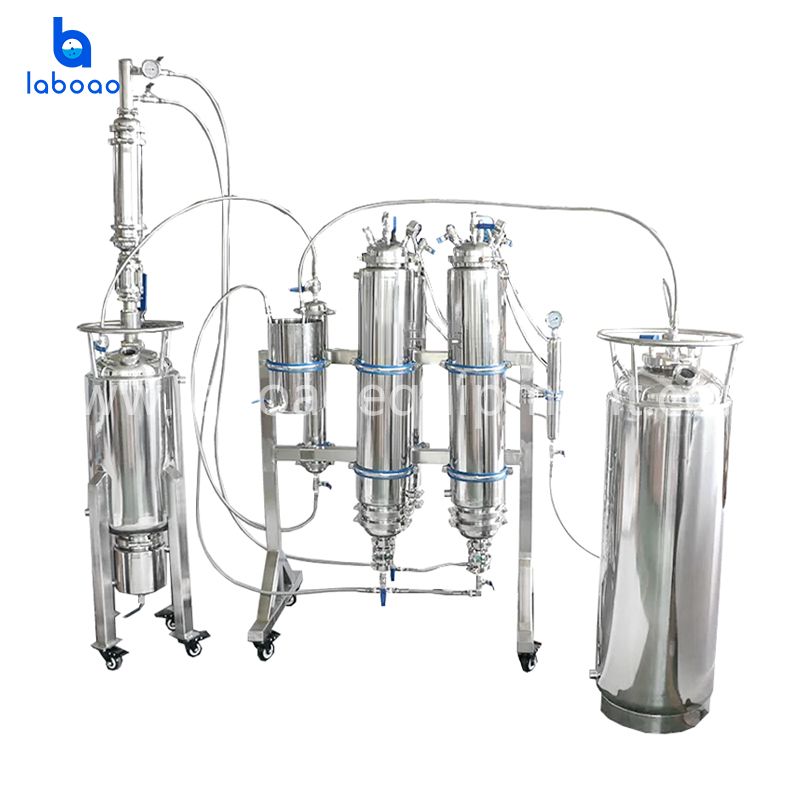
I. Main Components of a Short-Path Distillation System
• Chiller: When discussing short-path distillation, the term "chiller" can sometimes be misleading. This device is used to maintain the condenser at a specific temperature (typically between 40°C and 60°C) to ensure that the distillate condenses readily and to prevent clogging within the short path.
• Vacuum Pump: A chemically resistant vacuum pump is a critical component of a short-path distillation system. It serves to create a vacuum within the system, allowing vaporized compounds to travel through the short path and subsequently re-condense. Rotary vane (oil) pumps are the preferred type of pump for distillation applications, and they should be capable of achieving a vacuum depth of at least 50 microns.
• Cold Trap: A cold trap is used to capture vapors that pass through the condenser, thereby protecting the vacuum system and extending its operational lifespan.
• Short Path Assembly: The short path assembly itself consists of four main glass components and a heating mantle. These include the boiling flask, the short-path head, the receiving cow (distillate collector), and the receiving flasks. The short-path head is a pivotal component in the distillation process; it is here that the vapor comes into contact with small indentations—known as "Vigreux"—which create the theoretical plates necessary for distillation and serve to purify the vapor before it enters the condenser path.
• Heating Mantle: Similar to the heating bath found on a rotary evaporator, this device is used to heat the mixture contained within the boiling flask.
• Receiving Flasks: These flasks correspond to the three main fractions of the distillate and are used to collect the purified compounds as they re-condense. In more advanced short-path distillation setups, additional components—such as single-cow adapters, interchangeable adapters, and column packing—may also be utilized.
II. Main Applications of Short-Path Distillation
• Extracts: Short-path distillation is frequently used for the purification of plant extracts, such as essential oils and resins. This technique enables the isolation of specific compounds from extracts, thereby yielding high-purity products.
• Pharmaceuticals:This process is employed to purify and isolate specific compounds—such as alkaloids and terpenes—from natural products, which are subsequently utilized in pharmaceutical manufacturing.
• Flavors and Fragrances:Short-path distillation is used to purify and isolate specific compounds—such as terpenes and esters—that serve as ingredients in the production of flavors and fragrances.
• Cannabis and Cannabis Derivatives:Short-path distillation is utilized to purify and isolate specific compounds—such as CBD, THC, and others—from cannabis and its derivatives.
•Environmental Analysis:Short-path distillation also finds application in the field of environmental analysis, where it is used to purify and isolate specific compounds—such as volatile organic compounds (VOCs)—from air and water samples.
• Biotechnology:Short-path distillation is employed in biotechnology for the purification of enzymes and proteins.
• Research and Development (R&D):Short-path distillation is also utilized in research and development settings to purify and isolate specific compounds for use in scientific experiments and for the study of their properties.
III. The Short-Path Distillation Process
Once one possesses a thorough understanding of the constituent components and chemical processes involved, short-path distillation becomes a relatively straightforward procedure. It is a technique used to obtain purified compounds—referred to as "distillates"—which typically present as clear or golden-yellow liquids, possessing virtually no taste or color.
The short-path distillation process involves placing an oleoresin into a boiling flask; by leveraging specific temperatures and vacuum pressures, the active compounds within the mixture are compelled to evaporate and transform into vapor. These vaporized compounds are then drawn by a vacuum pump into a condenser pathway, where they re-condense into liquid form and are subsequently collected in various receiving flasks connected via a "cow" adapter. Characterized by its high efficiency and precision, short-path distillation serves as an invaluable technique for purifying high-value compounds—such as essential oils, flavors, and fragrances—as well as for isolating specific compounds from natural products.
IV. Conclusion
Short-path distillation boasts a wide range of applications, including the purification of extracts, pharmaceuticals, flavors, and fragrances, as well as the isolation of specific compounds from natural products. It stands as a powerful and precise technique with extensive utility across numerous industries and within the realm of research and development.

-analyzer-1695623743955.jpg)