Operating Instructions And Troubleshooting For Constant Temperature Water Bath Shakers
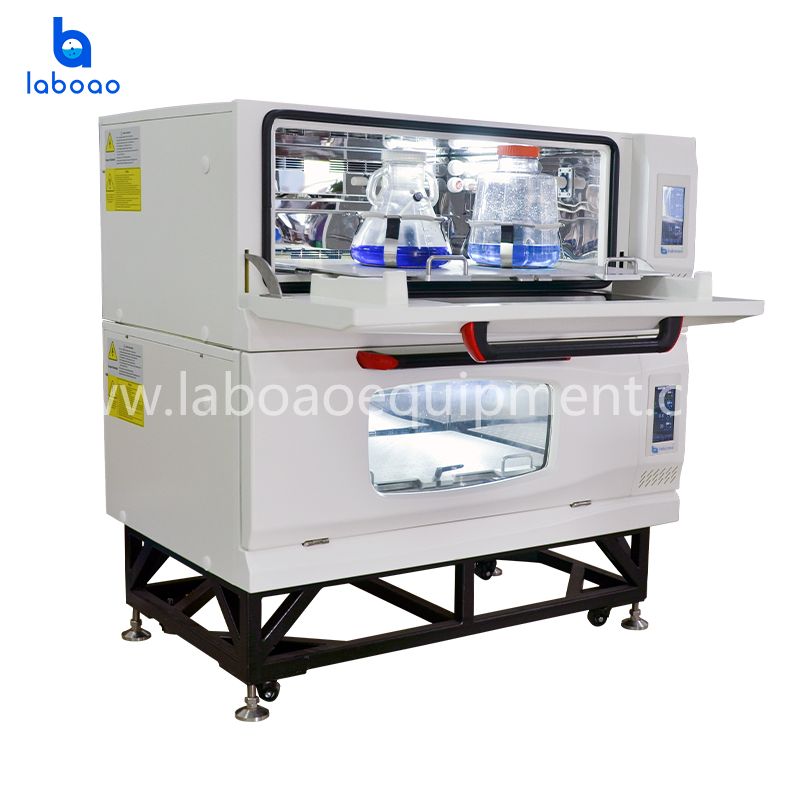
This article will introduce the precautions and common problems encountered when using constant temperature water bath shakers.
I. Working Modes of Constant Temperature Water Bath Shakers
1. Rotary Oscillation
This working mode, also known as circular oscillation, refers to 360° rotational oscillation on a horizontal plane. In this mode, the liquid being oscillated forms vortices within the container, achieving a uniform oscillation effect.
2. Reciprocating Oscillation
As the name suggests, this oscillation method refers to the liquid oscillating back and forth. This method utilizes inertial vibration of the sample. Why use this vibration method? Because when the liquid viscosity is high, this vibration method is more effective than rotational vibration.
3. Dual-function Vibration
This method combines rotational and reciprocating vibration. One operating mode can be selected based on sample characteristics and work requirements.
II. Precautions for Using the Constant Temperature Water Bath Shaker
1. The shaker should be placed on a flat surface or a stable tabletop, avoiding direct sunlight and keeping the room dry.
2. The power socket should have a good grounding device. Turn off the instrument switch before plugging in the power cord.
3. If any abnormality occurs after powering on, immediately unplug the power cord and have a professional technician inspect the instrument.
4. Pay attention to the temperature setting range and ambient temperature for different models. Setting the temperature outside the specified range may damage the instrument or even cause a safety accident.
5. Before using the constant temperature water bath shaker, turn the speed control knob to the lowest position and turn off the "shake switch".
6. When setting the speed, pay attention to the way the experimental bottles are secured. Setting the speed too high may cause the spring mesh to fail to secure the experimental bottles, resulting in an accident. When loading culture flasks, please note the following:
(1) Distribute evenly; (2) Do not fill with too little liquid to prevent the flasks from floating; (3) Seal the flask openings to prevent condensation from dripping into the flasks.
7. Fill the water tank with tap water. The water level should be slightly higher than the liquid level in the culture flasks. Do not use hard water, such as well water, river water, or spring water, as this may cause the heating element to break and affect the temperature control sensitivity.
8. Before each shutdown, all switches should be in the non-operating state, the timer should be set to "zero," and the power should be turned off.
9. Do not use the heater when the water tank is empty. If the thermostatic water bath shaker is not used for a long time, drain the water from the tank and wipe the tank dry with a soft cloth.
10. Do not move the machine during normal operation; do not allow objects to hit the thermostatic water bath shaker; keep children away from the machine to prevent accidents.
11. Always disconnect the power before replacing parts or performing maintenance. III. Common Fault Analysis of Constant Temperature Water Bath Oscillators
Fault 1: The constant temperature water bath oscillator does not heat, but oscillates normally.
Solution: First, check if the heating element is damaged. If damaged, it needs to be replaced. Then, check if the temperature control component is damaged; if damaged, it also needs to be replaced.
Fault 2: The constant temperature water bath oscillator heats normally, but oscillation does not work.
Solution: Open the control cabinet side panel, connect the power supply, set the temperature control to 0 degrees, turn on the oscillation switch, and adjust the speed to the highest setting. Use a multimeter set to AC 250V range to measure if the transformer has 220V input voltage. If there is no voltage, the switch is faulty. Otherwise, measure if the transformer has 12V output voltage. If there is no output voltage, the transformer is faulty. However, do not easily replace the transformer at this time, as this situation is usually caused by a short circuit in the circuit board rectifier section or the motor. Replace it only after ruling out the above possibilities.
Fault 3: The constant temperature water bath oscillator heats normally, but the oscillation speed is slow.
Troubleshooting:
Fault 4: The temperature of the constant temperature water bath oscillator fluctuates greatly.
Solution: This may be due to an incorrect cooling mode setting. Please reset it according to the instruction manual.
Fault 5: The measured temperature is too high, frequently triggering an over-temperature alarm.
Solution: The starting control temperature may be too high. Please open the ventilation holes on the back of the instrument or enable the cooling function.
Fault 6: The temperature inside the chamber fluctuates greatly and is too low.
Solution: This may be caused by frequent opening and closing of the chamber door. Please avoid frequent opening and closing of the chamber door during use.
Fault 7: The constant temperature water bath oscillator is not working, and the control panel has no display.
Troubleshooting: Check if the external power supply is connected or if the fuse is blown, if the instrument's power plug is inserted correctly, if the power socket has power, and if the power switch is turned on.

-analyzer-1695623743955.jpg)