Advantages And Disadvantages Of Freeze Dryers
I. Advantages of Freeze Dryers
There are various drying methods available—such as sun drying, boiling, oven drying, spray drying, and vacuum drying—but conventional drying methods typically operate at temperatures at or above 0°C. Products obtained through these standard methods often suffer from issues such as volume shrinkage and hardening of texture; furthermore, most volatile components are lost, heat-sensitive substances undergo denaturation or deactivation, and some materials may even undergo oxidation. Consequently, the physical characteristics of the dried product differ significantly from those of the material prior to drying.
In contrast, the freeze-drying process is conducted almost entirely below 0°C—that is, while the product remains in a frozen state. The temperature is raised above 0°C only during the final stages, specifically to reduce the product's residual moisture content; even then, the temperature generally does not exceed 40°C. Under vacuum conditions, as water vapor directly sublimes away, the solid components of the material remain within the structural matrix formed by the ice crystals during freezing, resulting in a loose, porous, sponge-like structure. Consequently, the product's volume remains virtually unchanged after drying. When ready for use, one simply needs to add sterile water for injection, and the material will dissolve immediately.
Compared to conventional methods, the freeze-drying technique offers the following advantages:
1. Many heat-sensitive substances do not undergo denaturation or deactivation.
2. Because drying is conducted at low temperatures, the loss of volatile components within the material is minimal.
3. During the freeze-drying process, microbial growth and enzymatic activity are inhibited; thus, the material's original characteristics are preserved.
4. Since drying occurs while the material is in a frozen state, its volume remains virtually unchanged; the original structural integrity is maintained, and no concentration effects occur.
5. Because the moisture within the material exists in the form of ice crystals following the pre-freezing stage, any inorganic salts or other soluble substances originally dissolved in the water become uniformly distributed throughout the material. During the sublimation phase, dissolved solutes within the water precipitate out; this prevents the surface hardening phenomenon—often encountered in conventional drying methods—where inorganic salts are carried to the surface by migrating internal moisture and subsequently crystallize there.
6. The dried material is loose, porous, and sponge-like in texture; upon the addition of water, it dissolves rapidly and completely, recovering its original characteristics almost instantaneously.
7. Since the drying process is conducted under vacuum conditions—where oxygen levels are extremely low—substances prone to oxidation are effectively protected.
8. The drying process removes over 95% (and often more than 99%) of the moisture content, thereby enabling the dried product to be stored for extended periods without undergoing spoilage.
9. Because the material remains in a frozen state at very low temperatures, the required temperature of the heat source is relatively low; heating elements operating at ambient or moderately elevated temperatures are sufficient to meet these requirements. Furthermore, if the freezing chamber and drying chamber are physically separated, the drying chamber does not require thermal insulation, resulting in minimal heat loss and, consequently, highly economical utilization of thermal energy.
II. Disadvantages of Freeze Dryers
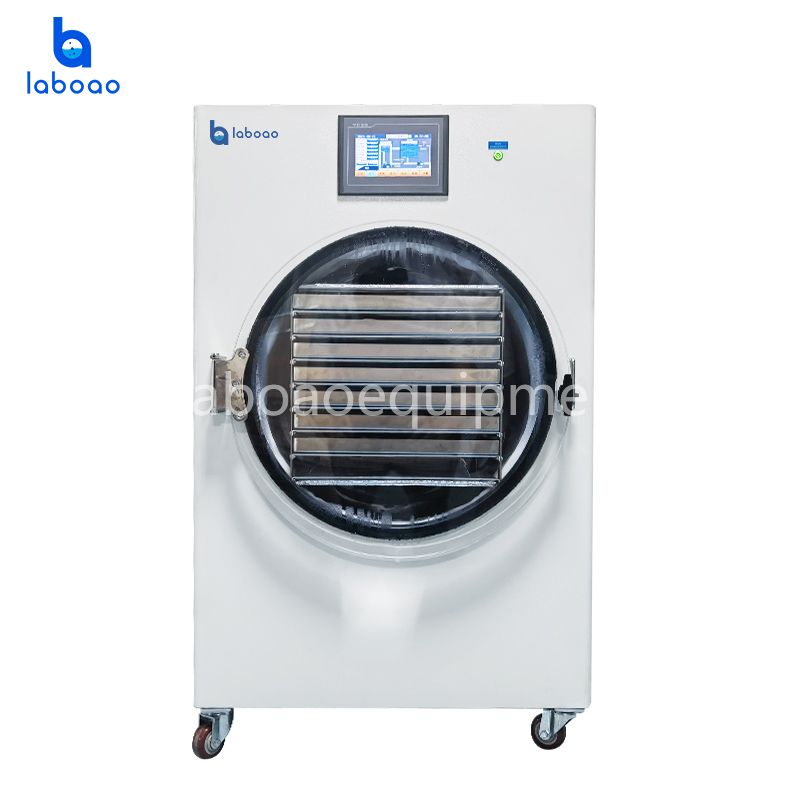
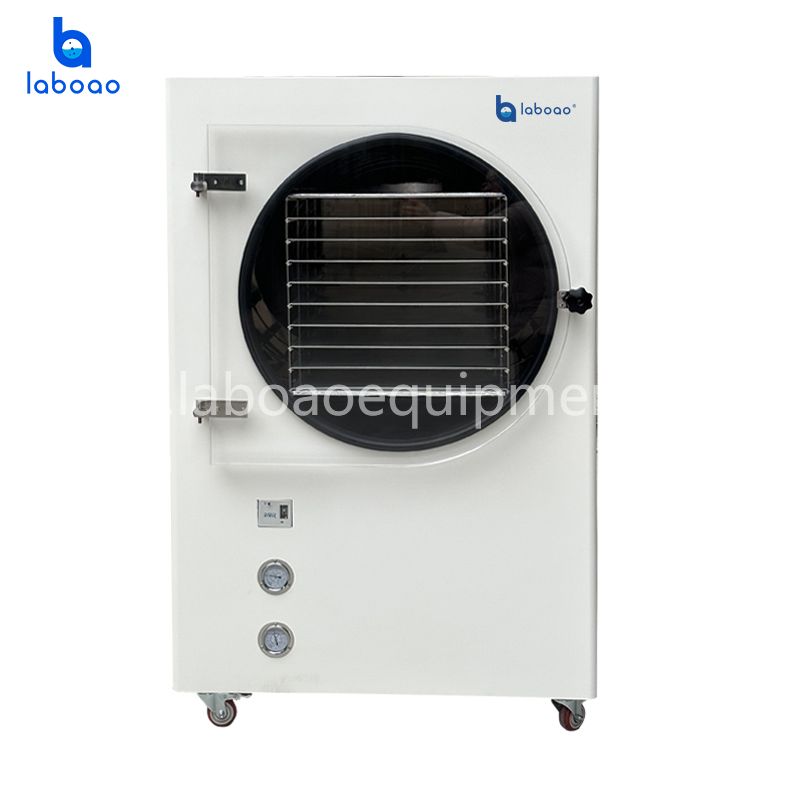
The primary disadvantage of vacuum freeze-drying technology is its high cost. Since the process necessitates both vacuum and low-temperature conditions, a vacuum freeze dryer must be equipped with dedicated vacuum and refrigeration systems; as a result, both the initial capital investment and the ongoing operational costs are relatively high.

-analyzer-1695623743955.jpg)